Le patchbay est un équipement souvent mal compris, notamment par les guitaristes et bassistes qui cherchent à optimiser leur pedalboard.
Dans cet article, nous allons faire le point sur son utilité, ses différentes versions et comment il peut améliorer ton setup.

Patchbay studio vs patchbay pour pedalboard
Avant d’aller plus loin, il est important de distinguer deux types de patchbays :
- Le patchbay studio, utilisé dans les studios d’enregistrement
- Le patchbay pour pedalboard, conçu pour centraliser les connexions des pédales d’effets
Le patchbay en studio : une interface de gestion centralisée
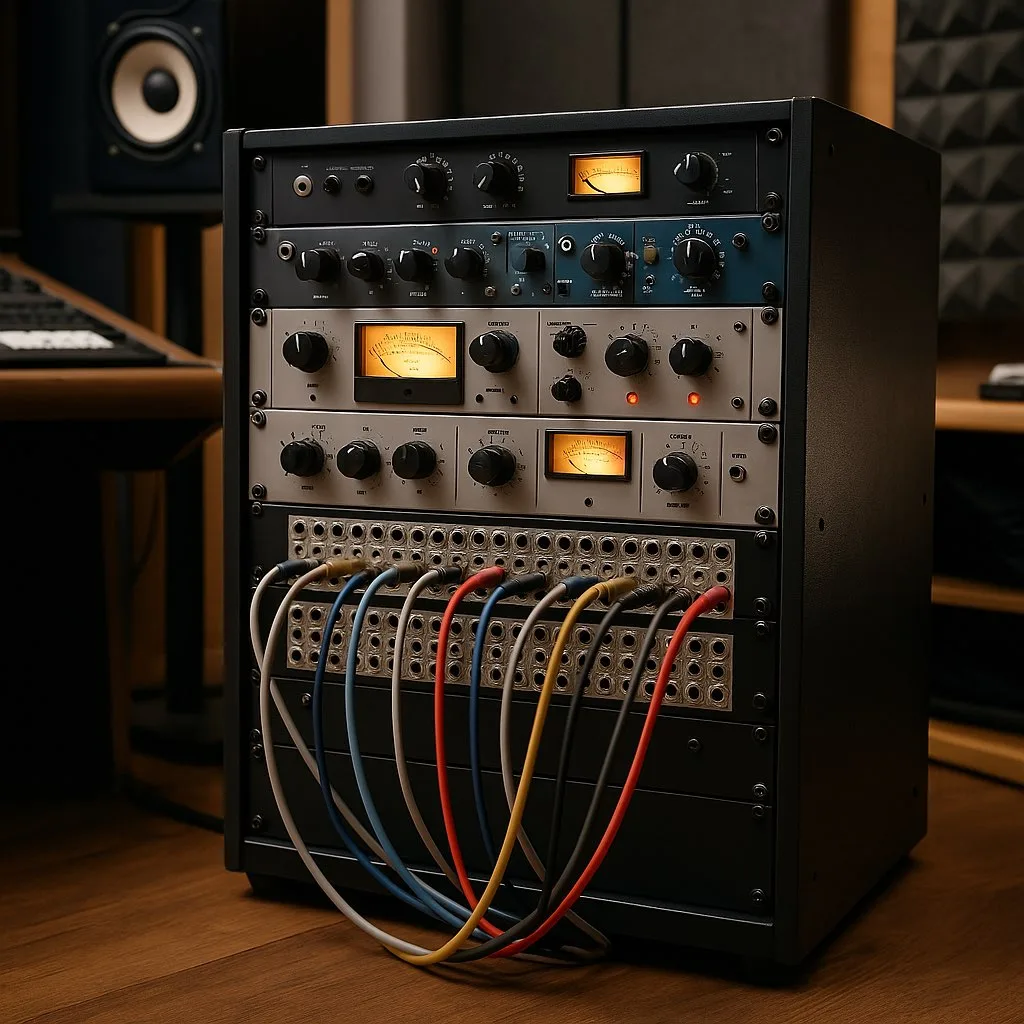
Si tu as déjà visité un studio d’enregistrement, tu as probablement remarqué un panneau rempli de connecteurs jack reliés par de petits câbles. C’est un patchbay studio.
Son rôle ? 👉 Simplifier les connexions entre les différents appareils (compresseurs, préamplis, effets 19’).
Ces appareils sont souvent montés dans des meubles, rendant leurs entrées et sorties arrière difficiles d’accès. Le patchbay permet donc de déporter ces connexions sur la face avant, pour les rendre accessibles et faciliter les branchements.
Le patchbay pour pedalboard : interface de connexion
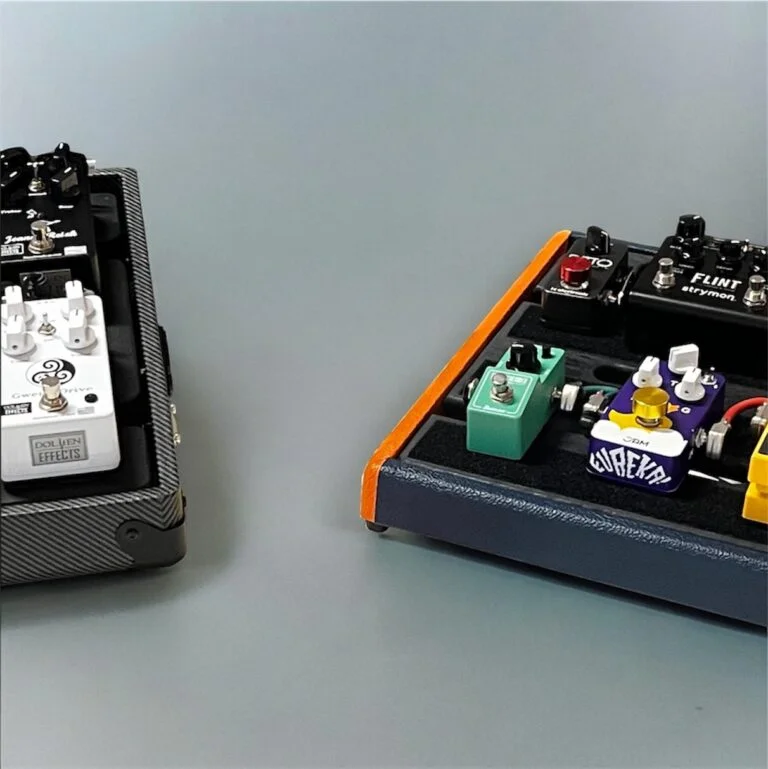
Un patchbay pour pedalboard, que l’on devrait plutot appeler Interface de Connexion Basé sur le Principe d’un Patchbay de Studio, fonctionne sur le même principe 👉 centraliser toutes les connexions en un seul endroit.
C'est pourquoi dans les 2 cas on parle de patchbay !
Prenons un exemple concret :
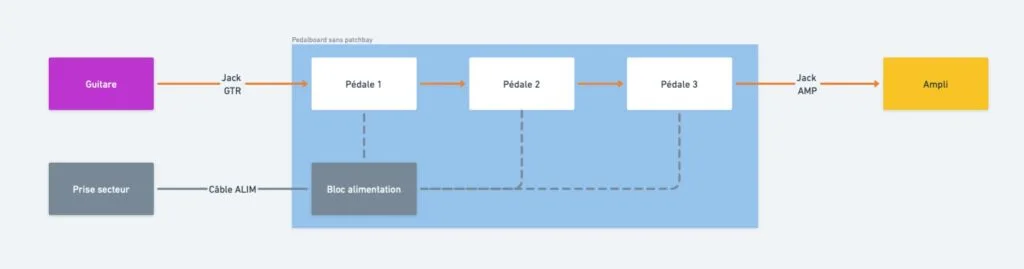
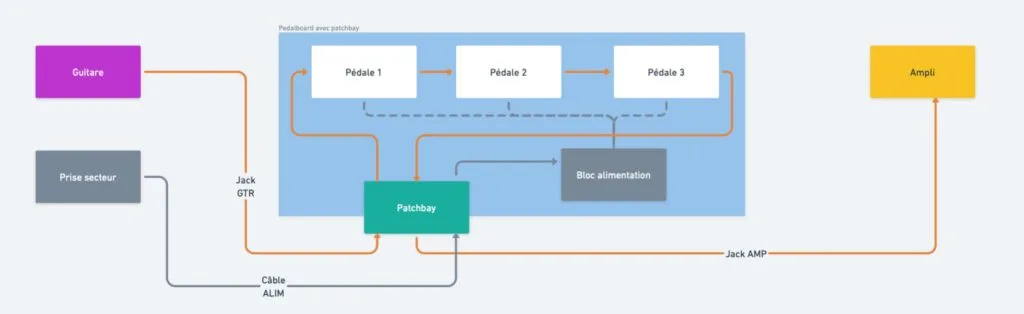
– Sans patchbay : tu branches ta guitare sur la première pédale, puis un autre câble relie la dernière pédale à ton ampli, et tu dois retourner ton pedalboard pour connecter l’alimentation.
– Avec un patchbay : toutes ces connexions se font au même endroit, évitant ainsi les erreurs de branchement et les manipulations compliquées
Un patchbay pour tous types de signaux
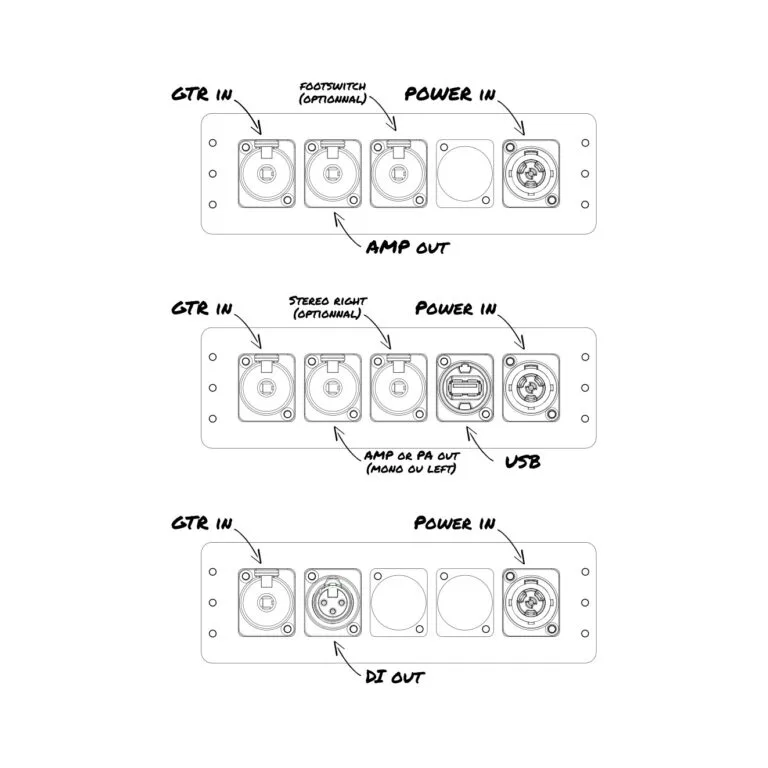
Un patchbay ne se limite pas aux connexions audio. Il peut accueillir différents types de signaux :
- Audio (jack, XLR, etc.)
- Électrique (prise type IEC ou PowerCON)
- Numérique (USB, MIDI, etc.)
Les différents formats de patchbay pour pedalboard
Il existe deux principaux formats de patchbay pour pedalboard :
1. Les patchbays au format boîtier
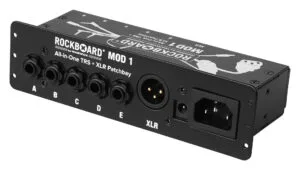
Certains fabricants proposent des patchbays sous forme de boîtier préconfiguré. Ces modèles sont pratiques mais limitent souvent les entrées/sorties disponibles aux options intégrées.
2. Les patchbays modulaires au format plaque
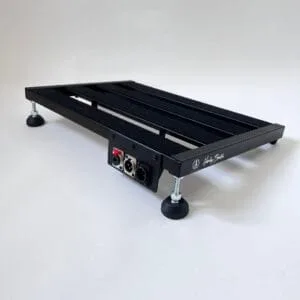
Les patchbays modulaires, comme ceux de rhuitsept, permettent d’adapter les connexions selon tes besoins et de les faire évoluer.
Par exemple, si tu veux remplacer une entrée jack par une entrée XLR, il te suffit de changer le connecteur sans modifier l’ensemble du patchbay. Cette flexibilité en fait une solution idéale pour les musiciens qui font évoluer leur matériel au fil du temps.
Pourquoi utiliser un patchbay pour ton pedalboard ?
En résumé, un patchbay pour pedalboard permet de :
✅ Centraliser les entrées et sorties de ton pedalboard
✅ Simplifier les branchements pour gagner du temps
✅ Fiabiliser ton setup et réduire les risques de mauvais contacts
Que tu sois un musicien en studio ou un guitariste en live, le patchbay est un outil incontournable pour optimiser ton installation. Si tu veux un pedalboard bien organisé et performant, c’est un élément à considérer !
The patchbay is a piece of equipment often misunderstood, especially by guitarists and bassists looking to optimize their pedalboard.
In this article, we’ll take a look at its benefits, its different versions and how it can improve your setup.
Patchbay studio vs patchbay for pedalboard
Before going any further, it’s important to understand the difference between two types of patchbays:
- The studio patchbay, used in recording studios
- The pedalboard patchbay, designed to centralize effect pedal connections
The studio patchbay: a centralized management interface
If you’ve ever visited a recording studio, you’ve probably noticed a panel full of jack connectors linked by small cables. It’s a studio patchbay.
What does it do? 👉 To simplify connections between the various devices (compressors, preamps, 19′ effects).
These devices are often mounted in cabinets, making their rear inputs and outputs difficult to access. The patchbay allows these connections to be moved to the front panel, making them accessible and facilitating connections.
The pedalboard patchbay: a connection interface
A pedalboard patchbay, which we should rather call a Connection Interface based on the principle of a Studio Patchbay, works on the same principle 👉 centralizing all connections in one place.
Let’s take a concrete example:
– Without a patchbay: you plug your guitar into the first pedal, then another cable connects the last pedal to your amp, and you have to turn your pedalboard upside down to connect the power supply.
– With a patchbay: all these connections are made in the same place, avoiding connection errors and complicated handling.


A patchbay for all signal types
A patchbay is not limited to audio connections. It can accommodate different types of signal:
- Audio (jack, XLR, etc.)
- Electrical (IEC or PowerCON type plug)
- Digital (USB, MIDI, etc.)
The different pedalboard patchbay formats
There are two main pedalboard patchbay formats:
1. Patchbays in box format
Some manufacturers offer patchbays in the form of pre-configured boxes. These models are practical, but often limit the available inputs/outputs to built-in options.
2. Modular patchbays in plate format
Modular patchbays, like those from rhuitsept, allow you to adapt the connections to your needs and make them evolve.
For example, if you want to replace a jack input with an XLR input, all you have to do is change the connector without modifying the whole patchbay. This flexibility makes it an ideal solution for musicians who evolve their equipment over time.
Why use a patchbay for your pedalboard?
In a few words, a pedalboard patchbay allows you to:
✅ Centralize your pedalboard’s inputs and outputs
✅ Simplify connections to save time
✅ Make your setup more reliable and reduce the risk of bad contacts
Whether you’re a studio musician or a live guitarist, a patchbay is an essential tool for optimizing your setup. If you want a well-organized, high-performance pedalboard, it’s a must-have!